
 Posted by
 Like a lot of people, Eric Clayton grew up enjoying fantasy stories like “Star Wars” and “The Lord of the Rings”. And in these sagas, he found spiritual truths that have stayed with him.
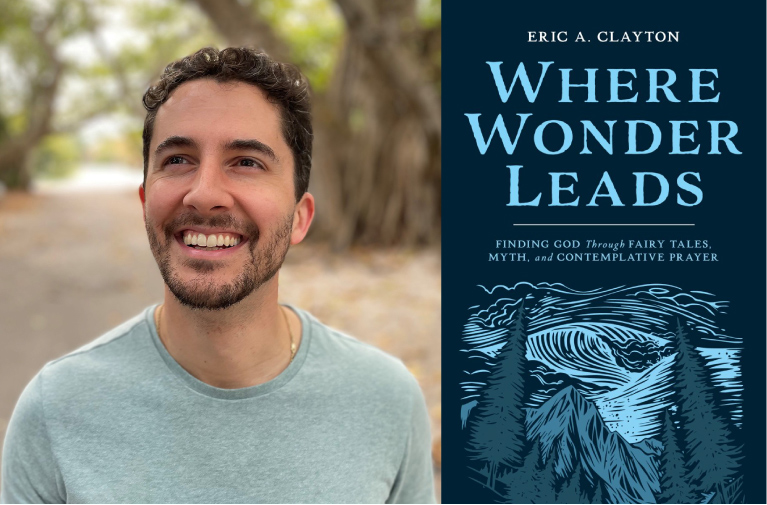
As a Catholic author and retreat leader focused on Ignatian spirituality and the use of imagination, Eric also realizes that God is issuing a call to adventure to each of us that can lead us down the road He wants us to travel, similar to the heroes in classic stories. Eric shares his insights in his latest book, “Where Wonder Leads: Finding God Through Fairy Tales, Myth, and Contemplative Prayer,” and we discussed it recently on “Christopher Closeup (podcast below).
We usually think of prayer as a quiet, solitary experience, but Eric believes that it can lead us to a more adventurous life. He explained, “I have found that the movement from status quo to discomfort is essential in prayer, in our spiritual lives. God tries to shake us loose…in those quiet moments of prayer, based on what we’re reading: a line of Scripture sings to us or a book we’re praying with grabs us. And I think it grabs us because we’re stuck somewhere in our own lives and the Spirit is saying, ‘Hey, what if you took a step into the unknown? What if you took a step into adventure?'”
Eric noted that this is what happened with St. Ignatius of Loyola, a warrior who eventually put down his sword after God invited Him to follow a radically different path in his life. In essence, St. Ignatius changed his status quo to dive into an uncomfortable new reality.
“That’s precisely the movement of most of our Western canon stories,” Eric pointed out. “That’s the hero’s journey that Joseph Campbell tracks, that movement where we have to recognize where we’re stuck, where our life is now, what the status quo has become, and where God might be inviting us to step into something new. Look at Luke Skywalker…He’s stuck on Tatooine. He doesn’t like it. That’s his comfort zone. That’s where he knows things, but it’s a broken status quo. He needs to step into the life of a Jedi…Our prayer lives are constant invitations to conversion, to turn back to God, to see where God is calling us deeper into ourselves because Jesus never leaves us as we are. There’s always more to grow, always more to learn. So that’s where I’m finding that call to adventure from prayer.”
In “Where Wonder Leads,” Eric doesn’t just analyze famous stories for God’s presence, he creates a fictional adventure that allows readers to place themselves into the tale and use their imaginations to explore spiritual questions.
He took this approach so readers can ask, “What does the Spirit want to say to me through these stories, these tropes, these themes? It’s very Ignatian. Ignatian contemplative prayer invites us to put ourselves in the scene of Scripture. So [this is] very similar to that, except we’re putting ourselves into the scenes of fantasy novels…I wanted to give people a tool, a book that they could bring on retreat, or they could sit down every morning with their cup of coffee and pray through. That meant these contemplative meditations that are written in the second person, because I want you, the reader, to be the character. And yes, you’re going to see elements that feel a little like Lord of the Rings or the Hobbit…[or] a particular Greek myth…These are all the influences that have been important to me in my own life, so it was important for me to write them in there, to pay homage “
Being a father to his daughters also played a role in Eric’s approach to “Where Wonder Leads.” He explained, “One of the things that’s very important to me as a Catholic dad is that I want my kids to have a sacramental imagination. I want them to see in the stuff of the world, the Creator, glimpses of, ‘Oh, this points beyond.’ My eldest daughter received her first Holy Communion last year. That’s the source and summit of that idea. But I think the stories that we introduce our kids to, the things we play, the way we spend our time, can continue to feed that imagination.”
“My girls are really big into fairy gardens,” Eric continued. “I don’t expect fairies to necessarily swoop in and take up residence, but I like this idea of my kids going out and saying, ‘How do we prepare a space for something that we don’t ever see, we can’t touch, and yet we want to approach this space with a certain degree of reverence?’ I think that’s a great primer for them as they’re thinking about, how do I make space in my own life and heart for God, for the Holy Spirit?…it’s retilling the soil of the imagination so that they’re thinking, ‘What do these stories point to? How do these stories point beyond my lived experience?'”
There is a common misconception that fairy tales and fantasy stories are children’s entertainment, but Eric disagrees, noting that these types of stories force adults to pay attention to details in ways they may not do on a daily basis.
He explained, “I think the fantasy genre writ large, including fairytales and even myths, are pushed to the side because it’s not real. Why waste my time on things that aren’t real, [some people say]? But what these kinds of worlds demand of us is that we pay close attention. We look for puzzle pieces. We need to enter into the story with curiosity: what kind of world is this? What’s the internal logic? How do things work here? What’s important? What matters? Those are the kinds of questions that we don’t always bring to our daily lives anymore because…we think we know it all…But when we enter a new world…I need to work to figure out what’s going on here. And so, those are virtues of humility: I don’t know it all. Virtues of curiosity: I need to ask questions, to look to other characters to figure out what’s going on. These are things that are important for our daily lives, but that we don’t need to practice if we think we already know all the answers.”
(To listen to the full interview with Eric Clayton, click on the podcast link):
RELATED

