
 Posted by
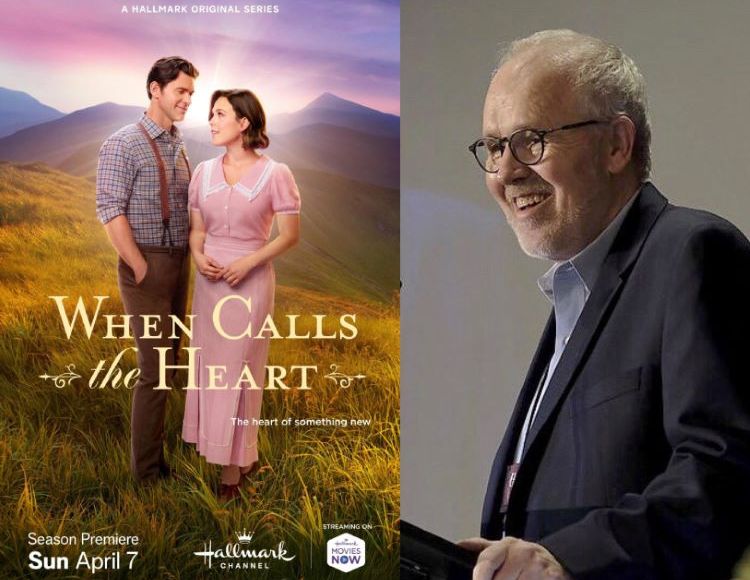
 If you need a break from the cynical or dystopian stories that make up a good chunk of our media landscape today, take a trip to Hope Valley, the fictional town at the center of the popular and Christopher Award-winning Hallmark Channel series “When Calls the Heart.” Currently in its 11th season and airing Sunday nights at 9/8 C, the show, set in 1920 in a Canadian frontier town, celebrates the better angels of our nature and what we can achieve when a community focuses on the common good.
Brian Bird – who created the series with Michael Landon Jr. and Brad Krevoy, based on Janette Oke’s novels – joined me recently on “Christopher Closeup” (podcast below) to discuss the reasons that “When Calls the Heart’s” continues to draw millions of viewers every week, what’s going on in season 11, and how his own journey through faith and doubt led to the show’s hopeful outlook.
“When Calls the Heart” boasts a diverse group of characters, led by actress Erin Krakow’s Elizabeth Thornton, who has evolved from an unsure, tremulous, well-intentioned young teacher to a confident and compassionate mother, friend, and citizen with wisdom to spare. While the stories include plenty of romance, there are also elements of action, mystery, faith, family dynamics, local politics, schoolroom lessons, and more.
Brian credits the series’ success to the fact that few other networks and broadcasters are making this kind of “soul food…about community and sacrifice and people helping one another.”
In the last three decades, Brian has noticed that TV programs often focus on anti-heroes and the dark side of human nature. “When Calls the Heart” offers the opposite: “There’s not a cynical bone in the body of this show. It reminds people that they need to be part of something bigger than themselves, that there’s a reason for them, that they have a purpose for living. We’re not just staring into the void of mindless, pitiless indifference, which is where I think secular culture has taken us…I believe we’re put here by a Creator, and there is a purpose for our life. At a time when not too many people are talking about those kinds of subjects on television, we are. I actually think that’s why we’ve resonated so well with people is that they’re starved to death for these values.”
At the beginning of season 11, for instance, the character of Dr. Faith Carter (Andrea Brooks) lamented that she felt lonely after one of her best friends moved away. Some shows might have used this as a set up to bring in a romantic interest for Faith (and that will likely happen at some point). But in the immediate situation, current showrunner Lindsay Sturman introduced a storyline in which Faith becomes a foster mother to a little girl named Lily, whose only surviving family is her hospitalized grandmother.
Brian said, “I love the fact that Faith is embracing an answer to her loneliness in a far different way, in [a] less trivial way, becoming a foster mother to a little pixie. Chloe, who plays Lily, is just golden…[It’s] a beautiful depiction of a different kind of love, where a mother’s love is showing up this year for Faith. For Andrea, who plays Faith, she’s a mom. This is in her bones to be able to do this kind of a role….I love that the doctor, who is a professional woman, now is confronted with, ‘If I’m the caregiver of this little girl, how do I juggle?’ There’s a lot of working moms out there who have to do that…When I first heard this idea from Lindsay last year when they were starting to break the stories, I just said, ‘More please,’ because it’s very personal to me. I have three biological boys and two adopted daughters, and my wife was a foster child most of her young life. So, we resonate big time with adoption stories, foster stories. I’m thrilled. I think this is one of the best things we’ve done in a long time…[It’s like] Providence is at work.”
Providence and faith in God are also recurring themes in “When Calls the Heart.” In a recent episode, after Pastor Joseph mediates a dispute between his son and daughter, he looks up to heaven and mouths the words, “Thank you.” It is a subtle but present expression of faith in a show that incorporates spirituality without thumping you over the head with it.
“I’ve never believed personally in creating content that was just a sermon on film,” Brian said. “What’s important to me is that whatever we stir up on the screen stirs up something that pulls people together into conversation, into community, so that they can help each other out. Those little whispers, those little paintbrush strokes of faith in ‘When Calls the Heart,’ in my mind, what it does best is stir up the conversation…Sometimes, there’s Scripture in the show and sometimes there’s a sermon or a prayer, but we try to let the media become the facilitator for the human conversation.”
As the son of a preacher turned radio DJ, Brian grew up spending a lot of time in church and came to faith at age seven. That faith was “sorely tested” in his college years, while attending journalism school, however.
Brian recalled, “I was now being confronted and faced with a much broader world…and a lot of questions. Journalists are naturally skeptics, right? You don’t want to just drink the Kool-Aid every time you’re given it from whoever you’re talking to. You want to probe. You want to find out the real reasons for things. You want to get to the truth.”
Brian sought guidance from one of his journalism professors, asking him, “How do I reconcile who I have been and who I’ve been raised to be…with this much bigger, more complex, messy worldview that I’m now seeing as a journalist and in college?”
The professor responded, “Here’s how I reconciled it. I’m also a believer. My advice to you is, don’t be afraid of the marketplace of ideas because, in the marketplace of ideas, truth will always show up. Ultimately, truth will rise to the top. But if you’re afraid of the questions, you’re going to be afraid of the answer. So, don’t ever be afraid of the questions.”
Brian explained, “For me, as an adult Christian, who reaffirmed my faith and my relationship with God and with Christ all those years ago in college, I’m now not afraid of questions. I’m not afraid of any questions. The Bible is full of questions, lots of existential doubt on display all across the Bible. And yet, there’s a harmony of truth there that is as right-side up as the world is upside-down. Truth emerges despite the questions.”
That outlook helped Brian create one of the most redemptive character arcs ever portrayed on television in the character of Henry Gowen (Martin Cummins). Gowen began season one as the villain who was partly responsible for the deaths of many of the town’s men in a coal mine accident. In addition, he was not a man who made room for God in his life. During one early episode, when a reverend quotes a Scripture chapter and verse to him, Gowen answers, “I don’t speak Bible.”
The ensuing seasons, however, have taken Gowen on a journey of enlightenment and self-improvement. He has even come to save Hope Valley’s citizens and the town on several occasions. And the man who doesn’t “speak Bible” recently became a godfather to a baby at a church baptism.
None of this was planned out in the beginning, Brian noted. During the show’s first season, there was no redemption arc in the minds of the writers. Gowen was simply the villain, and the writers were just trying to tell good stories. But as with any good stories penned by talented writers and played by skilled actors, new possibilities emerged and evolved.
Brian said, “In hindsight, Henry reminds me of The Pilgrim’s Progress. It’s almost like this epic poem of this man. He doesn’t break bad. He breaks good in his character arc. He goes from antihero to hero. I love the many layers of Henry Gowen. We’ve revealed so much about his backstory. We’ve unpeeled that onion a layer at a time. We get to know him better every year. We get to understand why he ticks the way he ticks in the world, what drives him, what motivates him, what wounds he has borne in his own life, even as a child, and how that resonates with who he is becoming…I love the stories of broken people who are healed. It doesn’t mean that all the wounds of the past disappear overnight. They reveal themselves on this journey of healing that a character can go on. That truly is the path of Henry Gowen. Every year, something has been revealed…about his life that is a new color, is a new wrinkle, that is part of the sum total of who he is. His friendship with Pastor Joseph, I think, is so powerful. It makes me tear up every time I see those guys together because it’s grace. It’s grace in action.”
Another aspect of “When Calls the Heart” is romance, specifically the relationships of lead character Elizabeth Thornton, whose mountie husband died in an accident in season five, leaving her a widow with a baby on the way. Subsequent seasons saw Elizabeth in a love triangle with saloon owner Lucas Bouchard (Chris McNally) and Hope Valley’s new mountie, Nathan Grant (Kevin McGarry). Elizabeth wound up choosing Lucas, but broke off her engagement to him at the end of season 10 when he became governor and was willing to leave Hope Valley. Season 11 is playing out Elizabeth and Nathan’s attraction to each other.
The show’s fans – who dubbed themselves “Hearties” way back in season one – have had some emotional reactions, making the topic the third rail of “When Calls the Heart.” Those who wanted Elizabeth with Nathan in the first place are thrilled, while devotees of Lucas are heartbroken and, in a few cases, extremely angry.
Regarding the choice to switch love interests for Elizabeth, Brian said, “Having lived with the constant fear of being married to an officer of the law, which is a very relevant thing these days, for sure, it’s not surprising to me that [Elizabeth] chose the safe path with Lucas. Lucas was not in physical danger every time he walked out of the saloon. He was a man with grand visions. He’s romantic and he wanted to…take care of her and all of that. That’s a very powerful elixir for people watching the show because it was romantic. I do believe they were in love, but I believe also that if Elizabeth settled and chose Lucas out of fear, that’s not necessarily a good, healthy way to get into a relationship. I think her eyes were opened up to that.”
“I love the fact that we’re telling a story that people can relate to,” Brian continued. “Most of us have had relationships with other people before we finally found our soulmate. That’s a universal story, so we don’t apologize. We’re sorry that fans get their hearts broken for a while or that they feel bruised, but we’re not sorry about what we’re doing with the stories because we believe, first of all, it’s in the best interest of the whole community of characters, but it’s also in the best interest of the longevity of the show to keep stories fresh and to keep people guessing what’s happening. That’s a good thing to do. It may make people slightly uncomfortable for a while, but that’s what good storytelling always does and always has done. Anyway, that’s my best answer. I think it was elegantly handled. Lucas was built for a bigger stage than a small town. He really was. I mean, that character from the very get-go was kind of an international man of mystery. Keep watching season 11 because that returns.”
While Chris McNally fans might have seen the breakup with Elizabeth as a demotion for the actor and character, Brian explained, “Not if you keep watching.”
So what can viewers expect for the rest of season 11? Brian said, “The power of closure on some stories that we’ve set up, even in way earlier seasons, comes to resolution in season 11. I’m not going to deny that we have another cliffhanger coming…We know that to sustain [fans’] hunger for the show, we’ve got to leave them wanting more. We’ve got a beautiful, very interesting cliffhanger coming at the end of season 11, but I think closure on some powerful things is important in this season. Some of the cast have talked about new beginnings as the theme of season 11. That is true. There are new beginnings that we’ve even talked about a little bit today, but there’s also some powerful closure.”
Looking to the future of “When Calls the Heart,” Brian believes the show has plenty of story potential to go on for many more seasons. He also reflected on the show’s enduring legacy, recalling that journalist Faith Salie of “CBS Sunday Morning” covered last year’s Hearties Family Reunion, a fan event that drew 400 people from around the world to the Vancouver, Canada set. Fans are also active on various social media sites and on podcasts, such as “Heart to Hearties.”
Brian said, “The best legacy of ‘When Calls the Heart’ [is that it] has fostered friendships all over the world between people who didn’t know each other until they started watching the show, and then the show became a catalyst for them to have a friendship. Those friendships are going to outlive the show.”
“Community is king in a show like this,” Brian added. “Community needs to be king in our world, too, right? We need to…have a sense of community in our lives when we’ve grown so isolated in our own silos in our culture…I think that it’s a way to survive the brokenness that we see all around us, when politics don’t work and when other aspects of culture seem to be in a mess. [‘When Calls the Heart’] can show a community that figures out how to get along together. They’re not all perfect people, but at the end of the day, they do the right thing….There’s something profoundly comforting about that.”
(To listen to my full, extended interview with Brian Bird, click on the podcast link):
Watch “When Calls the Heart” on the Hallmark Channel Sunday nights at 9/8C.
 Light One Candle - the blog of The Christophers